

Table of Contents
Introduction
An iptv subscription is the gateway to flexible, affordable internet television — and in 2026, demand for this type of service has never been higher. With traditional cable contracts becoming increasingly expensive and restrictive, more households are switching to internet-delivered television that works across every screen they own, without long-term commitments or hidden fees.
But not every iptv subscription delivers the same experience. The market is competitive and varies enormously in quality, value, and reliability. Understanding what to look for before you commit — and knowing the right questions to ask — makes the difference between a subscription that enhances your daily entertainment and one that disappoints from week one.
This guide covers everything: what an iptv subscription includes, how pricing works, what features define a quality plan, how to choose the right tier for your household, setup essentials, and the most important questions buyers ask before subscribing.
Users should comply with local laws and content licensing regulations when purchasing and using any iptv subscription.
What an IPTV Subscription Actually Includes
Before comparing plans and prices, it helps to understand exactly what a standard iptv subscription provides — and where the differences between providers tend to appear.
At its core, an iptv subscription grants access to a hosted library of live television channels and on-demand content delivered through your broadband internet connection. When you subscribe, you receive credentials — typically a username, password, and server URL — that you enter into an IPTV player application on your device. The app loads your channel list, and streaming begins.
Most iptv subscription plans in 2026 include some combination of:
- Live channels — ranging from a few hundred to several thousand, covering news, sports, entertainment, and international content
- Electronic Programme Guide (EPG) — a scheduling guide that shows what is currently playing and upcoming on each channel
- Video on Demand (VOD) — a library of films and series available to watch at any time
- Catch-up TV — the ability to watch content that aired within the past 24–72 hours on demand
- Multi-device access — streaming on smart TVs, smartphones, tablets, and desktop browsers under a single account
The depth and quality of each element varies between providers, which is why evaluating what is actually included — not just the headline channel count — is essential before purchasing any iptv subscription.
IPTV Subscription Pricing: What to Expect in 2026
Pricing across the iptv subscription market spans a wide range, and understanding the structure helps you identify genuine value from artificially cheap offers that cut corners on infrastructure and support.
Monthly plans offer the most flexibility. A standard iptv subscription on a monthly basis typically costs between €5 and €20 depending on the provider, tier, and number of simultaneous connections included. Monthly plans are the right starting point for new subscribers who want to evaluate quality before committing longer-term.
Quarterly plans — covering three months — usually represent a 15–25% saving compared to the equivalent monthly rate. They suit subscribers who have already confirmed quality through a trial or initial month and want a modest discount without a full annual commitment.
Annual plans offer the deepest discounts, typically 30–50% off the monthly equivalent. An iptv subscription on an annual plan makes strong financial sense for satisfied subscribers, but committing at this level before confirming service quality through a shorter period carries obvious risk.
Multi-connection tiers are a common upsell in the iptv subscription market. A single-connection plan allows streaming on one device at a time; two, three, or five-connection plans cost progressively more but suit households where multiple viewers watch simultaneously on different screens.
Always verify what is included in each tier before purchasing. A premium-priced iptv subscription should include a full VOD library, catch-up TV, and accurate EPG — not just a larger channel count.
Content availability may vary by region regardless of subscription tier or provider.
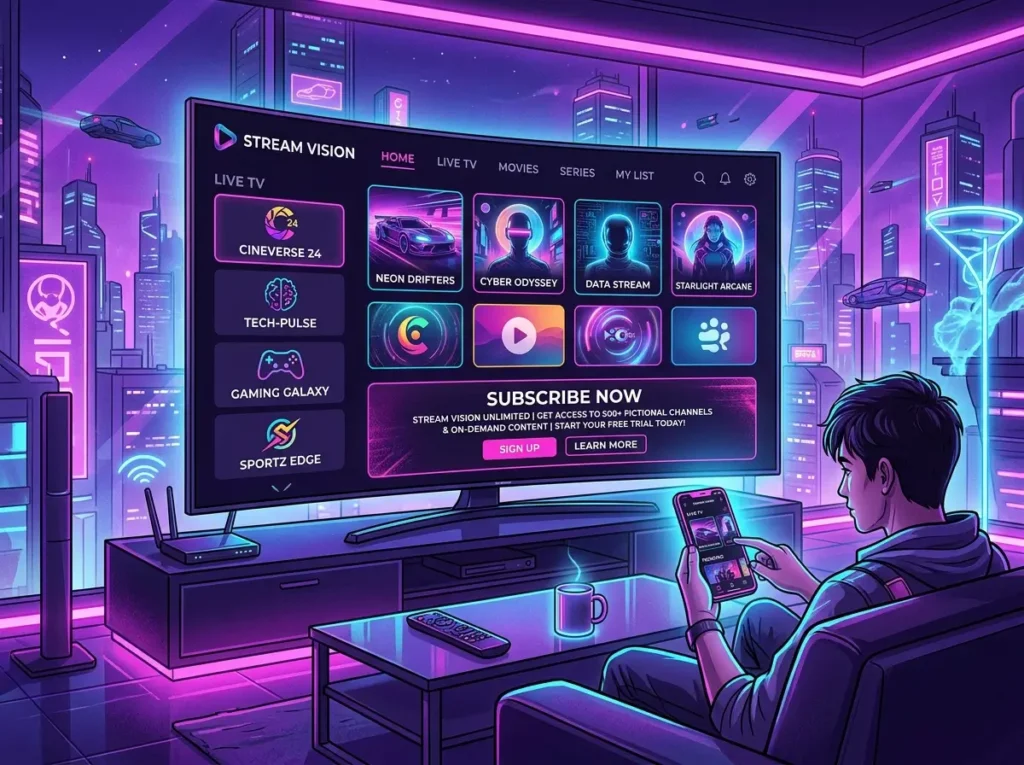
Choosing the Right IPTV Subscription Plan for Your Household
Matching the right iptv subscription tier to your actual viewing habits avoids overpaying for features you won’t use and under-buying connections you genuinely need.
Single-viewer households typically need a one-connection plan with a solid channel library and reliable EPG. VOD depth matters more for solo viewers who watch on their own schedule. A mid-tier iptv-subscription from a well-reviewed provider will serve this use case comfortably.
Families and shared households need multi-connection plans to allow simultaneous streaming on different devices. Confirm the exact number of concurrent streams supported before purchasing — a plan advertised for household use that only supports two connections may fall short during peak evening hours when multiple family members want to watch different content.
Sports viewers should prioritize stream stability above all else. Live sports events are the hardest test for any iptv subscription provider’s infrastructure. Seek out providers known for reliable performance during major events and confirm that your chosen plan includes the sports channels you watch most.
International viewers and expatriates benefit most from providers with broad multilingual and multi-region channel libraries. A quality iptv subscription in this category should include channels from your home country alongside local content, all within a single plan.
Casual viewers who primarily want on-demand content alongside basic live channels may find a lower-tier iptv-subscription with a strong VOD library more valuable than a premium plan with thousands of live channels they will rarely use.
How to Set Up Your IPTV Subscription
Once you’ve purchased an iptv subscription, the setup process is consistent across most providers and takes under 15 minutes on most devices.
Step 1 — Receive your credentials. After payment, your provider delivers a username, password, and server URL — or an M3U playlist link. Keep these details stored securely.
Step 2 — Choose an IPTV player. If your provider has a dedicated app, install it from your device’s app store. If not, a compatible third-party IPTV player that accepts M3U playlists or Xtream Codes credentials works with virtually any iptv-subscription.
Step 3 — Enter your login details. Open the player, navigate to the add-playlist or login section, and enter the credentials from your provider. The application loads your full channel list and VOD library automatically once credentials are accepted.
Step 4 — Optimize your connection. A wired Ethernet connection provides the most stable streaming experience. If using Wi-Fi, connect on a 5GHz network where available. Most providers recommend a minimum of 25 Mbps for HD streams and 50 Mbps for 4K content.
Step 5 — Explore and organize. Browse the EPG, build a favorites list from your most-watched channels, and explore the VOD library. Most IPTV players allow you to filter content by category, language, or genre.
Key Features That Define a Quality IPTV Subscription
With many providers competing for your business, these are the features that distinguish a premium iptv-subscription from a lower-quality alternative.
Stream uptime and stability. The single most important quality indicator. A reliable iptv subscription maintains consistent, buffer-free streams even during peak viewing hours and major live events — when server infrastructure is under the heaviest load.
EPG accuracy and update frequency. An accurate, real-time EPG transforms the experience from a raw list of streams to something that feels like proper television. Check that the programme guide updates reliably and covers at least 7 days of scheduling.
VOD library size and freshness. A large on-demand library that is regularly updated with new films and series adds substantial everyday value to any iptv-subscription beyond live channel access.
Catch-up TV availability. The ability to watch content from recent days removes the need to schedule viewing around broadcast times — a feature increasingly expected at mid-tier and above.
Customer support responsiveness. Reliable support matters when issues arise. A quality iptv-subscription comes backed by a support team that responds within hours, not days, and resolves problems effectively.
Trial period or money-back guarantee. Confident providers offer a short evaluation window before full commitment. An iptv subscription provider that refuses any form of trial should be approached with caution.

IPTV Subscription — Frequently Asked Questions
How long does an iptv subscription last?
Plans are available on monthly, quarterly, and annual terms. Most providers offer flexible monthly renewals with no long-term contract, plus discounted multi-month options for subscribers who have confirmed quality.
Can I use one iptv subscription on multiple TVs?
Yes, provided your plan includes multiple simultaneous connections. Confirm the connection allowance of your specific plan before purchasing if you need to stream on more than one screen at a time.
What internet speed do I need for an iptv subscription?
For HD streaming, a minimum of 10–25 Mbps per stream is recommended. For 4K content, 50 Mbps or more per stream ensures buffer-free playback. Multi-connection households should account for combined bandwidth across all simultaneous streams.
Is an iptv subscription compatible with my smart TV?
Most modern smart TVs support IPTV through dedicated provider apps or third-party IPTV player applications available in the device’s app store. Older televisions can be upgraded with an Android TV box to gain compatibility.
What happens when my iptv subscription expires?
Access to the channel list and VOD library is suspended until the subscription is renewed. Most providers send renewal reminders in advance. Renewing promptly avoids interruption to your viewing experience.
Can I cancel my iptv subscription at any time?
For monthly plans, yes — cancellation typically takes effect at the end of the current billing period. Annual plans vary by provider; check the cancellation and refund terms before committing to a longer-term plan.
Conclusion: Getting the Most from Your IPTV Subscription
The right iptv subscription — matched to your household size, viewing habits, and content priorities — delivers a television experience that is more flexible, more affordable, and more globally connected than traditional cable or satellite has ever offered.
Start with a monthly plan. Take advantage of any trial period available. Test stream stability at peak hours across the content types you actually watch. Once you’ve confirmed consistent quality, an annual iptv-subscription unlocks the best long-term value the market offers.
In 2026, the standard for what a quality iptv-subscription delivers continues to rise. With the right evaluation approach and the right provider, internet television becomes the obvious choice for any household ready to move beyond the limitations of traditional broadcast.

The emphasis on shifting away from restrictive cable contracts in 2026 really resonates, especially given how quickly users expect seamless, multi-screen flexibility without hidden fees. It’s also refreshing to see the guide stress the importance of verifying local licensing laws before committing, as that’s often the biggest pitfall in such a competitive market.