
Table of Contents
Introduction
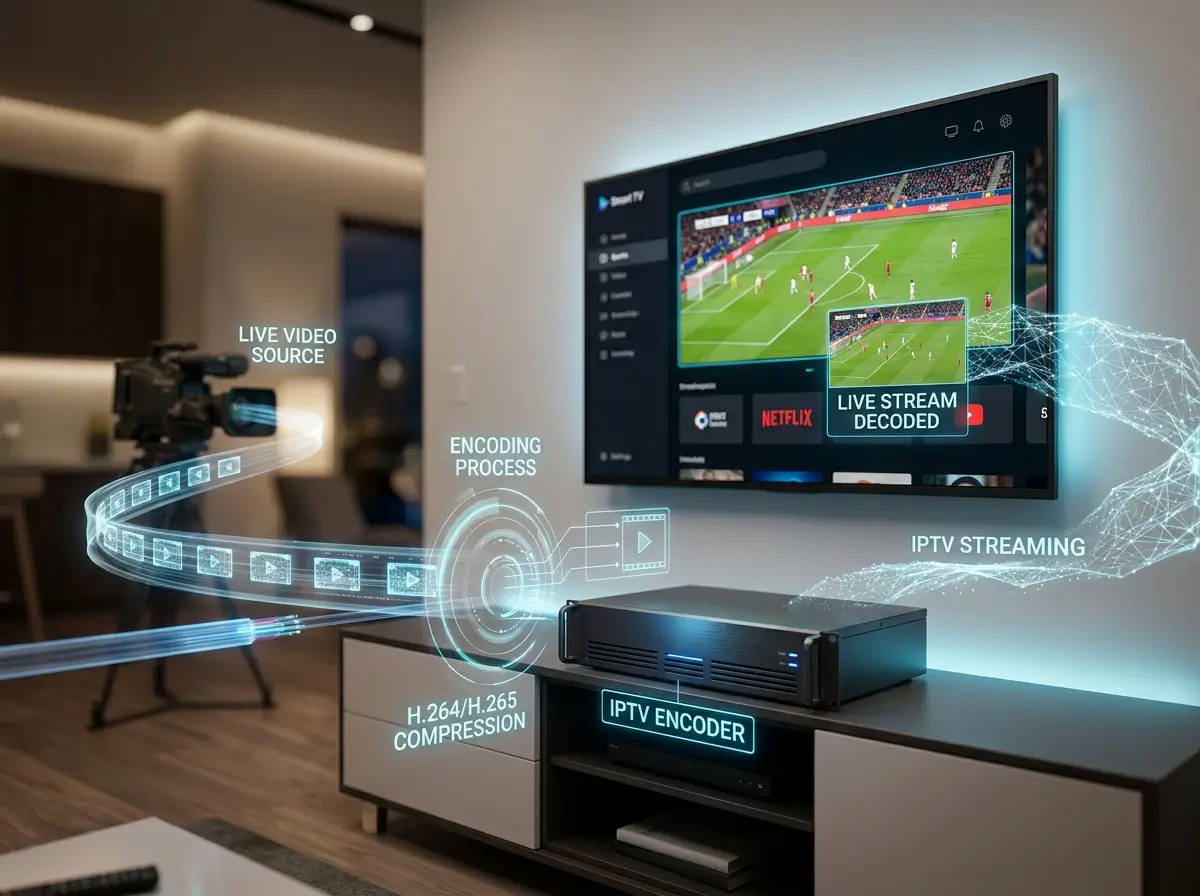
IPTV encoders are the backbone of any professional internet television infrastructure. Without them, there is no stream — no live broadcast, no hotel channel lineup, no campus video network. The encoder is the device that transforms a raw video signal from a camera, receiver, or playback source into a compressed, network-ready stream that televisions, computers, and mobile devices can receive and display in real time.
In 2026, iptv encoders span an enormous range of form factors, price points, and capability levels. From compact plug-and-play single-channel units to enterprise-grade rack systems encoding dozens of simultaneous feeds, the right encoder depends entirely on your deployment context, infrastructure, and budget.
This guide walks through everything that matters: how iptv encoders work, what specifications to prioritize, which use cases each type suits best, how to integrate them into a broader IPTV system, and the most frequently asked questions from buyers and engineers evaluating their options.
How IPTV Encoders Work
At their core, iptv encoders perform two fundamental operations: compression and packaging.
Compression takes the raw, uncompressed video signal from your source — which, at 1080p60, can represent multiple gigabits of data per second — and reduces it to a manageable bitrate using a video codec. The two dominant codecs used by iptv encoders in 2026 are H.264 (AVC) and H.265 (HEVC). H.264 offers near-universal playback compatibility, while H.265 achieves roughly double the efficiency, delivering equivalent visual quality at around half the bitrate — a meaningful advantage for bandwidth-constrained networks and large multi-channel deployments.
Packaging and transport wraps the compressed video (and accompanying audio) into a streaming protocol for network delivery. Common protocols used by iptv-encoders include RTMP for pushing streams to media servers and CDNs, HLS for browser and mobile delivery, UDP multicast for efficient local network distribution, and RTSP for point-to-point streaming scenarios.
What separates dedicated iptv-encoders from software-based alternatives is the use of purpose-built silicon — application-specific integrated circuits (ASICs) or dedicated media processors designed exclusively for real-time video encoding. This hardware acceleration enables continuous 24/7 operation at consistent quality, with latencies as low as a few hundred milliseconds, and without the thermal and stability issues inherent in general-purpose CPU-based encoding.
Types of IPTV Encoders: Matching Hardware to Your Needs
The category of iptv encoders you need depends heavily on your deployment scale and input requirements.
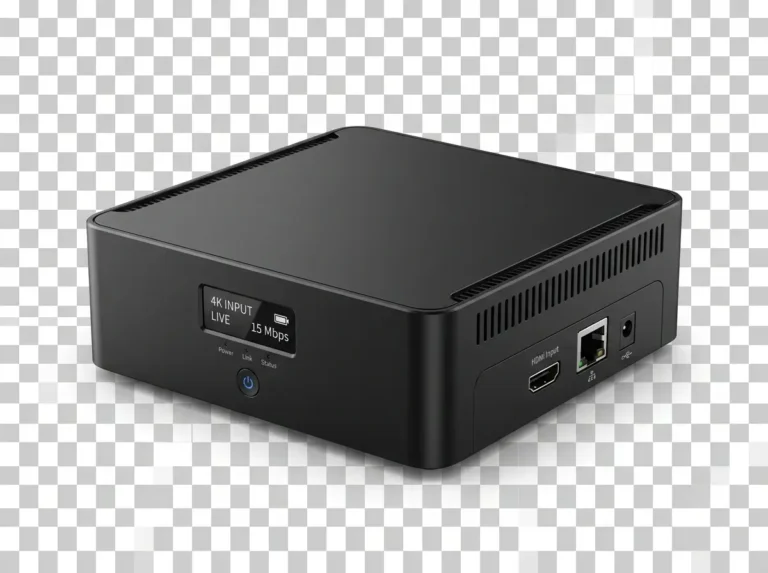
Single-channel HDMI encoders are the entry point of the market. Compact and affordable, these iptv-encoders accept one HDMI input and output a single compressed stream. They suit small venues, single-camera live streams, classrooms, or small businesses distributing one video source across a local network or to an online platform.
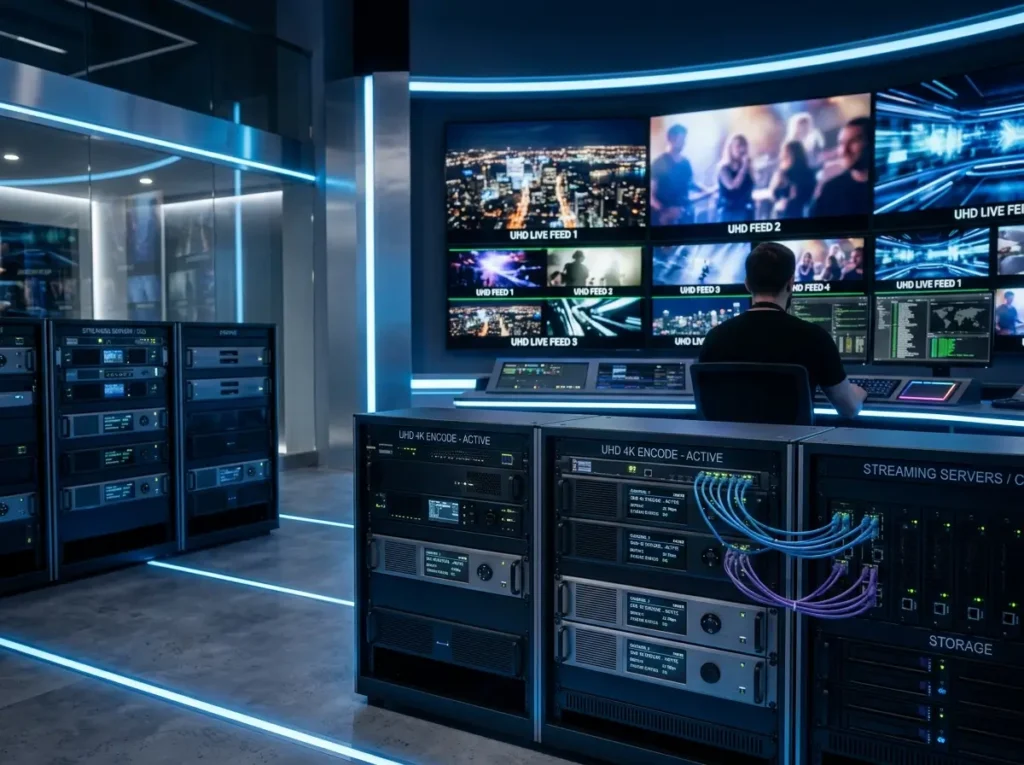
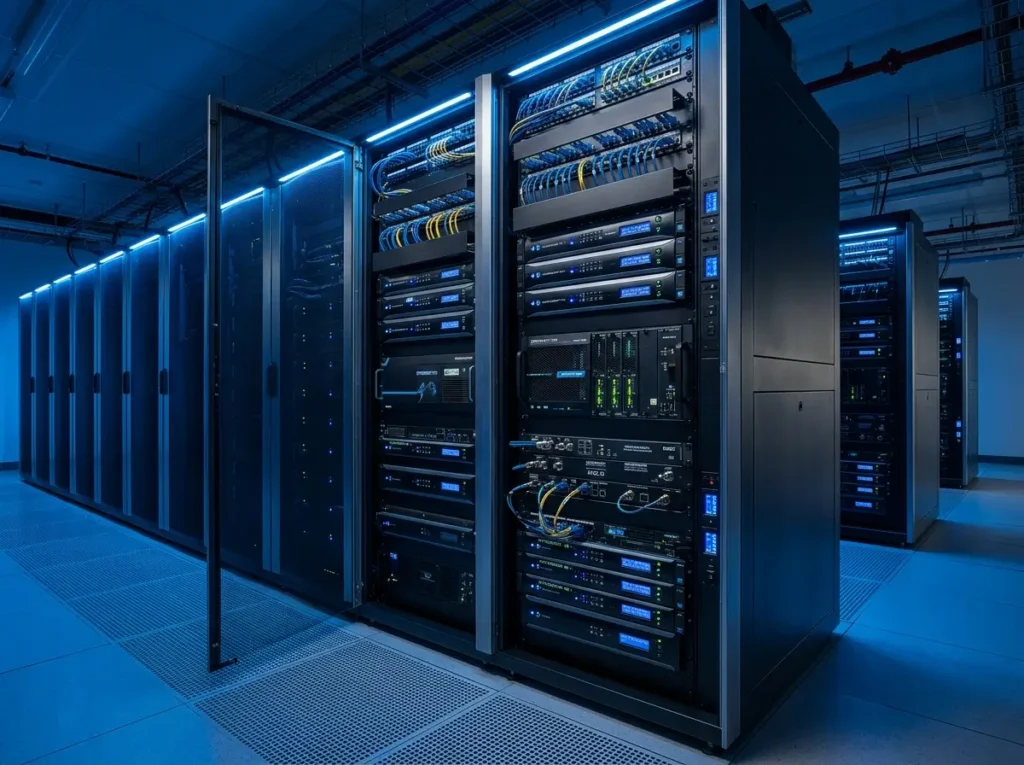
Multi-channel encoders house multiple encoding engines in a single device, typically in rack-mount form factors. These iptv encoders handle 4, 8, or 16 simultaneous input channels — ideal for hotel IPTV headends, broadcast facilities, or campus networks where many video sources need to be encoded and distributed concurrently. Rack units also simplify cabling, power management, and network connectivity in professional installations.
SDI encoders accept professional broadcast-grade SDI signals rather than HDMI. SDI cabling supports long cable runs — up to 100 meters and beyond with appropriate equipment — making these iptv encoders the standard choice for broadcast studios, live event venues, and any installation where camera distances exceed the practical limits of HDMI.
4K UHD encoders represent the premium tier of the market. These iptv-encoders handle ultra-high-definition video at resolutions up to 3840×2160, typically using H.265 to keep bitrates manageable. Demand for 4K encoding hardware has grown substantially as display technology has advanced and network infrastructure has improved.
Software-defined and hybrid encoders combine dedicated hardware with software flexibility, allowing configuration changes, protocol updates, and feature additions through firmware without hardware replacement. This category is growing in 2026 as operators seek longer hardware lifecycles.
Key Specifications to Evaluate in IPTV Encoders
When comparing iptv encoders, these are the specifications that have the greatest real-world impact on performance and compatibility.
Codec support. At minimum, look for H.264 support; H.265 is increasingly important for efficient use of available bandwidth. Some iptv encoders also support AV1, though playback device compatibility remains more limited for that format in 2026.
Maximum output bitrate. This determines the quality ceiling of your streams. For HD content, iptv-encoders should comfortably support output bitrates up to 15–20 Mbps per channel. 4K encoders typically support 25–50 Mbps per channel.
Low-latency mode. For live sports, interactive applications, or scenarios where real-time viewing is important, glass-to-glass latency is critical. Quality iptv encoders offer dedicated low-latency encoding modes that reduce delay to under one second.
Simultaneous output streams. Many iptv-encoders can deliver the same encoded content to multiple destinations simultaneously — for example, pushing RTMP to a media server while multicasting UDP to a local network. The number of simultaneous outputs supported varies by model.
Audio encoding. Video encoding is only half the equation. Verify support for your required audio codec — AAC is the standard for most IPTV deployments — and confirm the encoder handles multi-channel audio if your sources carry surround sound.
Management interface. A well-designed web-based management dashboard simplifies configuration, monitoring, and troubleshooting. Enterprise iptv encoders also support SNMP integration for inclusion in network management systems.
Build quality and thermal design. Iptv-encoders in permanent installations run continuously. Fanless passive cooling is preferred for noise-sensitive environments; active cooling with reliable fan systems suits rack deployments. Confirm operating temperature ranges match your installation environment.
Integrating IPTV Encoders into a Complete System
IPTV encoders do not operate in isolation — they are one component in a broader distribution architecture. Understanding where they fit helps ensure your system design is coherent.
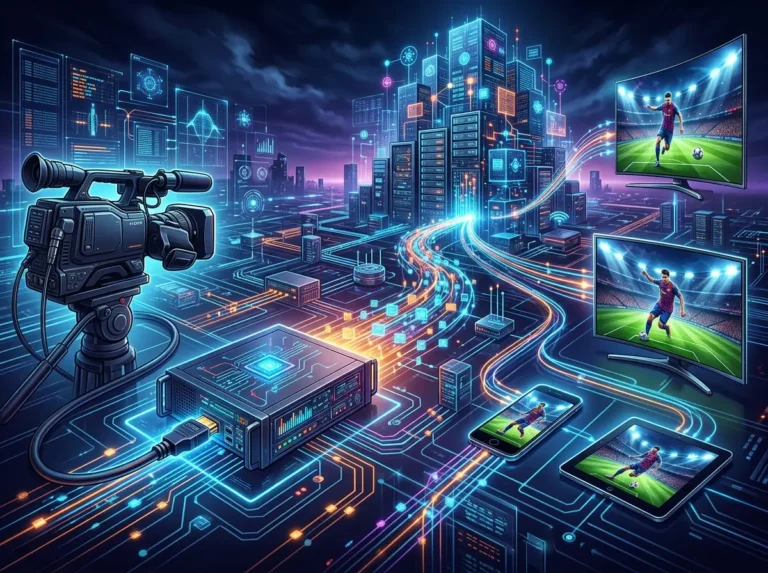
The headend is where iptv-encoders live. This is the collection point for all video sources: satellite receivers, antenna feeds, local playback systems, and live camera feeds. Each source connects to an encoder input; the encoder outputs compressed streams to the distribution layer.
The distribution layer takes encoded streams and delivers them to end-user devices. In local networks, this typically means a media server or middleware platform that manages channel lists, EPG data, and access control. For internet delivery, a CDN or cloud streaming platform handles global distribution.
End-user devices — smart TVs, set-top boxes, computers, and mobile devices — receive and decode the streams produced by the iptv encoders upstream. Codec compatibility between encoder output and playback device capability must be confirmed at the system design stage.
Proper network infrastructure is equally important. UDP multicast distribution from iptv-encoders requires a network switch that supports IGMP snooping to manage multicast traffic efficiently and prevent unnecessary bandwidth consumption on uninvolved network segments.
IPTV Encoders — Frequently Asked Questions
What is the difference between iptv encoders and transcoders?
Encoders convert raw, uncompressed video signals into compressed streams. Transcoders take an already-compressed stream and re-encode it at a different bitrate, resolution, or codec — typically to create multiple quality variants from a single source. Many modern iptv encoders include transcoding functionality as an optional feature.
How many channels can one encoder handle?
This depends entirely on the model. Single-channel iptv encoders handle one input; multi-channel rack units handle 4 to 16 or more simultaneous channels. For very large deployments, multiple rack units are combined in the same headend.
Do iptv encoders work with all media server platforms?
Compatibility depends on supported output protocols. Most iptv-encoders support RTMP, HLS, and UDP — protocols accepted by virtually all major media server software and cloud streaming platforms. Always confirm protocol support against your specific middleware or server platform before purchasing.
What bitrate should I configure for HD IPTV?
For 1080p H.264 streams on a local network, 4–8 Mbps is standard. For internet delivery where bandwidth is a constraint, 2–4 Mbps with H.264 or 1.5–3 Mbps with H.265 delivers good quality. 4K streams typically require 15–25 Mbps for H.265 content.
Can iptv encoders be managed remotely?
Yes. Most professional iptv-encoders provide web-based management interfaces accessible over the local network or, with appropriate network configuration, remotely. Enterprise models often support SNMP and API-based management for integration with automated monitoring systems.
How long do iptv encoders typically last?
Quality hardware encoders are designed for multi-year continuous operation. With proper ventilation and stable power supply, a well-built encoder can reliably serve a deployment for five to ten years before hardware aging becomes a factor.
Conclusion: Selecting the Right IPTV Encoders for Your Deployment
Choosing among the many iptv encoders available in 2026 comes down to matching hardware capability to deployment requirements. Single-channel HDMI encoders serve small installations efficiently and affordably. Multi-channel rack systems are the correct tool for hotel networks, broadcast headends, and campus IPTV infrastructure. SDI inputs matter for professional broadcast environments; 4K support matters when your display infrastructure demands it.
Beyond specifications, prioritize build quality, management interface usability, and manufacturer support. IPTV encoders in professional deployments are expected to run continuously for years — reliability and supportability are as important as raw feature sets.
With the right iptv encoders in place, your entire video distribution infrastructure becomes more stable, more scalable, and easier to manage — whether you’re serving ten screens or ten thousand.
[…] 4k iptv encoder is the hardware that makes ultra-high-definition internet television distribution possible. As 4K […]